
What is Headless eCommerce? The Future of Online Retail
headless ecommerce

What is Headless eCommerce? The Future of Online Retail

Explore how headless eCommerce decouples the frontend from the backend, offering unparalleled flexibility and innovation for online businesses.

Discover Headless Power

Key Takeaways

  • ✓ Headless eCommerce separates the customer-facing 'head' (frontend) from the business logic 'body' (backend).
  • ✓ It uses APIs to communicate between the frontend and backend, enabling greater flexibility and customization.
  • ✓ Businesses can update their customer experience without disrupting core commerce operations.
  • ✓ This architecture supports omnichannel strategies and faster content delivery across various devices.

How It Works

1
Separation of Concerns

The presentation layer (what customers see) is distinct from the commerce engine (product data, pricing, orders). This allows each component to be developed and updated independently.

2
API-Driven Communication

Application Programming Interfaces (APIs) act as the bridge, allowing the frontend to request and receive data from the backend. This standardized communication ensures seamless data flow.

3
Frontend Flexibility

With the backend providing data via APIs, businesses can use any frontend technology or framework they choose. This empowers developers to create highly customized and engaging user interfaces.

4
Backend Stability & Scalability

The core commerce functionalities remain robust and can be scaled independently of the frontend. This ensures stable operations even during peak traffic or when implementing new features.

Understanding the Core Concept of Decoupled Commerce

Flat lay of a product lifecycle illustration with a pencil and folders, ideal for business presentations. Photo: RDNE Stock project / Pexels
To truly grasp what is headless eCommerce, it's essential to understand the fundamental shift it represents from traditional, monolithic eCommerce platforms. Imagine a traditional eCommerce store as a single, tightly integrated entity where the storefront (the 'head' or frontend) and the commerce engine (the 'body' or backend) are inextricably linked. Changes to one often necessitate changes to the other, making updates slow, complex, and prone to breaking existing functionalities. This 'coupled' approach has served businesses for decades, but in today's rapidly evolving digital landscape, its limitations are becoming increasingly apparent. Headless eCommerce, also known as decoupled commerce, breaks this bond. It's an architectural approach where the frontend presentation layer is completely separated from the backend commerce functionalities. The 'head' – which could be a website, a mobile app, a smart device, or even a voice assistant – is detached from the 'body' – the core eCommerce platform that handles product information, inventory, pricing, order management, and customer data. This separation is made possible through APIs (Application Programming Interfaces). These APIs act as universal translators, allowing the frontend to communicate with the backend, requesting and receiving data without needing to know the intricate details of how that data is processed or stored. Think of an API as a waiter in a restaurant: you (the frontend) tell the waiter what you want, and the waiter (API) communicates that to the kitchen (backend), which then prepares and delivers your order. You don't need to know how the kitchen operates to get your meal. This architectural freedom is not just a technical detail; it has profound implications for how businesses can innovate and adapt. With a headless setup, businesses are no longer confined to the predefined templates and functionalities of their chosen eCommerce platform. They gain the power to craft bespoke customer experiences across any touchpoint imaginable, leveraging the latest frontend technologies without being constrained by the backend. This flexibility is a game-changer for brands looking to differentiate themselves, respond quickly to market trends, and deliver truly personalized interactions. It moves the focus from 'what my platform can do' to 'what I want to achieve for my customers', empowering creative solutions previously unattainable with traditional systems. This foundational understanding is key to appreciating the transformative potential of headless commerce in the modern digital economy.

The Unrivaled Benefits of Headless eCommerce for Modern Brands
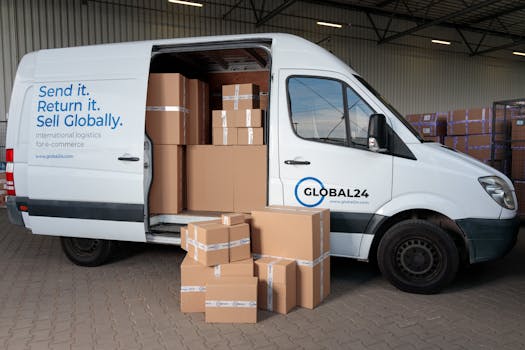
Delivery van loaded with cardboard boxes for global shipping logistics. Photo: Wojciech Kotlicki / Pexels
The adoption of a headless eCommerce architecture brings a multitude of advantages that directly address the challenges faced by contemporary online businesses. One of the most significant benefits is unparalleled flexibility and customization. Traditional platforms often come with themes and templates that, while easy to implement, can limit a brand's ability to create a truly unique and differentiated online presence. Headless commerce liberates businesses from these constraints, allowing them to design and implement any frontend experience they desire using the latest web technologies like React, Vue, or Angular. This means complete control over the user interface, design, and interactive elements, enabling a brand to perfectly align its digital storefront with its brand identity and customer expectations. This level of customization fosters brand loyalty and provides a competitive edge in crowded markets. Another critical advantage is enhanced speed and performance. With a decoupled architecture, the frontend can be optimized independently for speed, utilizing techniques like server-side rendering (SSR), static site generation (SSG), and advanced caching. This results in lightning-fast page load times, which are crucial for improving user experience, reducing bounce rates, and positively impacting SEO rankings. Customers today expect instant gratification, and slow-loading websites are a major deterrent. Headless eCommerce ensures that the presentation layer is lightweight and efficient, delivering content rapidly across all devices, from desktops to mobile phones and even smartwatches. Furthermore, headless eCommerce excels in supporting omnichannel strategies. In an age where customers interact with brands across numerous touchpoints – website, mobile app, social media, IoT devices, in-store kiosks – a unified experience is paramount. A headless setup allows the same backend commerce data and logic to power all these diverse 'heads' through a single set of APIs. This means product information, pricing, and inventory are consistent everywhere, providing a seamless and cohesive customer journey regardless of the channel. For example, a customer might browse products on a smart mirror, add them to a cart on their mobile app, and complete the purchase on the website, all while experiencing a continuous, personalized interaction. This unified approach is incredibly powerful for building customer trust and convenience. Finally, future-proofing and agility are inherent to headless commerce. As new technologies emerge (e.g., augmented reality, virtual reality, voice commerce), businesses with a headless setup can quickly integrate these new 'heads' without having to overhaul their entire commerce system. The backend remains stable, acting as a central repository of commerce capabilities, while new frontend innovations can be plugged in as needed. This allows brands to stay ahead of the curve, experiment with emerging channels, and adapt rapidly to changing consumer behaviors and technological advancements. It transforms the eCommerce platform from a limiting factor into an enabler of continuous innovation.

Navigating the Implementation: When is Headless Right for You?

Close-up of a toy shopping cart on a vivid yellow surface, casting shadows. Photo: Sergey Meshkov / Pexels
While the benefits of headless eCommerce are compelling, it's crucial for businesses to critically assess whether this architecture aligns with their specific needs, resources, and long-term goals. Understanding what is headless eCommerce from an implementation perspective helps in making an informed decision. One of the primary considerations is the need for a highly customized and unique user experience. If your brand thrives on differentiation, requires intricate design control, or needs to integrate with a complex ecosystem of third-party tools (CRM, ERP, PIM, marketing automation), then a headless approach offers the necessary freedom. Brands looking to create a truly bespoke digital storefront that stands out from templated solutions will find immense value here. Another key factor is the importance of performance and speed. If your target audience demands ultra-fast load times, or if SEO is a critical component of your acquisition strategy, headless can deliver superior results. By separating the frontend, developers can employ cutting-edge optimization techniques that are often difficult or impossible to implement within a monolithic platform's rigid structure. This can lead to higher conversion rates, lower bounce rates, and improved search engine rankings, directly impacting your bottom line. Businesses operating in highly competitive markets where every millisecond counts will particularly benefit from this aspect. Furthermore, if your business is pursuing an aggressive omnichannel strategy, headless eCommerce becomes almost a necessity. As discussed, it allows for a consistent brand experience across a diverse array of touchpoints – from traditional web and mobile to emerging channels like IoT devices, in-store digital displays, or even conversational commerce. If you envision your customers interacting with your brand on multiple platforms and devices, and you want to ensure a seamless and unified journey, headless provides the architectural foundation to achieve this without duplication of effort or data silos. However, it's also important to acknowledge that headless eCommerce comes with increased complexity and requires a higher level of technical expertise. You'll likely need a dedicated team of frontend developers, an understanding of API integrations, and potentially a more involved development and maintenance process compared to an out-of-the-box solution. The initial setup cost and time investment can be greater, but the long-term returns in terms of flexibility, scalability, and innovation can far outweigh these considerations. For businesses with significant growth ambitions, a strong technical team, and a desire to future-proof their digital commerce operations, investing in a headless architecture can be a strategic move that pays dividends for years to come. Aligning this with your overall eCommerce strategy is paramount for success.

Common Pitfalls and Best Practices in Headless Adoption

An outdoor scene of a package being delivered and a receipt being signed. Photo: Artem Podrez / Pexels
Adopting a headless eCommerce strategy, while powerful, is not without its challenges. Understanding potential pitfalls and adhering to best practices can significantly smooth the transition and maximize benefits. One common pitfall is underestimating the technical complexity. While a headless setup offers immense flexibility, it demands a more skilled development team capable of managing API integrations, frontend frameworks, and potentially multiple microservices. Businesses accustomed to 'click-and-configure' platforms may find the learning curve steep. Best practice dictates a thorough assessment of internal technical capabilities or a clear plan for hiring/partnering with experienced developers. Another mistake is neglecting content management. In a headless environment, content is often managed separately from the commerce platform using a Headless CMS (Content Management System). Failing to properly integrate the CMS or overlooking its importance can lead to fragmented content experiences and operational inefficiencies. A best practice is to choose a robust Headless CMS that seamlessly integrates with your commerce backend via APIs, allowing content editors to manage rich media, product descriptions, and marketing copy with ease across all channels. Over-customization can also be a pitfall. While headless offers infinite possibilities, not every element needs to be custom-built from scratch. This can lead to increased development time, higher costs, and more complex maintenance. A smart approach involves identifying core differentiating features for custom development and leveraging existing libraries or components for standard functionalities. Prioritize customization where it truly adds unique value to the customer experience. Finally, neglecting performance monitoring and optimization after launch is a critical error. Just because the architecture allows for speed doesn't mean it's automatically fast. Continuous monitoring of frontend performance, API response times, and overall user experience is essential. Implement robust analytics and A/B testing to identify bottlenecks and iteratively optimize your headless storefront. Regularly updating frontend frameworks and libraries, along with optimizing image and asset delivery, are ongoing best practices for maintaining peak performance. By being mindful of these potential challenges and proactively implementing best practices, businesses can successfully leverage the power of headless eCommerce to build a resilient, scalable, and highly engaging digital presence.

Comparison

FeatureHeadless eCommerceMonolithic eCommerce (Traditional)Hybrid Headless
Frontend/BackendSeparated (API-driven)CoupledPartially Separated
Flexibility & CustomizationUnrestricted, full controlLimited by platform templatesHigh, but with some pre-built components
Development ComplexityHigher (requires dev team)Lower (template-based)Moderate
Performance & SpeedExcellent (optimized frontend)Variable (can be slower)Very Good
Omnichannel SupportNative, unified experienceChallenging, often siloedGood, easier integration
Future-proofingHigh (adaptable to new tech)Low (platform dictates innovation)Good
Initial Cost/TimeHigherLowerModerate
Content ManagementRequires Headless CMSBuilt-in CMSIntegrated with Headless CMS

What Readers Say

"Moving to headless allowed us to completely redesign our mobile experience without touching our backend. Our conversions jumped by 15% within three months, which is a massive win for our brand."

Sarah Chen · Austin, TX

"Understanding what is headless eCommerce was the first step. Implementing it gave us the agility to launch new features much faster than before, keeping us ahead of our competitors. It's truly transformative."

Mark Johnson · Seattle, WA

"Our previous platform was a bottleneck for innovation. With headless, we built a personalized customer portal and a unique product configurator, directly leading to a 20% increase in average order value."

Emily Rodriguez · Miami, FL

"The initial investment and learning curve for headless were significant, but the long-term benefits in terms of flexibility and performance have been undeniable. We're now much more resilient to market changes."

David Lee · Denver, CO

"As a B2B company, we needed a highly customized portal for our clients. Headless eCommerce allowed us to integrate complex pricing rules and custom workflows seamlessly, vastly improving our client's ordering process."

Jessica White · Chicago, IL

Frequently Asked Questions

What is headless eCommerce in simple terms?

Headless eCommerce is an approach where your online store's visual front (what customers see) is separated from its functional back-end (where orders, products, and payments are managed). They communicate through APIs, giving you immense flexibility in how your store looks and functions across different devices.

Is headless eCommerce more expensive than traditional eCommerce?

Initially, headless eCommerce can have higher upfront development costs due to the need for custom frontend development and API integrations. However, it often leads to significant long-term savings and increased revenue through improved performance, better customer experiences, and greater agility for future innovations.

How do I choose the right platform for headless eCommerce?

Choosing the right platform involves selecting a robust backend commerce engine (like Shopify Plus, BigCommerce, Commercetools) that offers strong API capabilities, and then pairing it with a flexible frontend framework (like React, Vue, Next.js) and potentially a headless CMS. Consider your team's technical expertise and your specific customization needs.

What are the key differences between headless and traditional eCommerce?

The main difference is the coupling: traditional eCommerce tightly links the frontend and backend, while headless separates them. This separation in headless leads to greater flexibility, faster performance, better omnichannel support, and enhanced scalability compared to the often rigid structure of traditional platforms.

Can I integrate a headless store with my existing systems?

Yes, seamless integration with existing systems like ERP, CRM, PIM, and marketing automation tools is one of the core strengths of headless eCommerce. APIs facilitate this integration, allowing for a unified data flow and consistent operations across your entire business ecosystem.

Who should consider using headless eCommerce?

Headless eCommerce is ideal for businesses that require high levels of customization, seek to deliver exceptional performance, aim for a sophisticated omnichannel strategy, or plan to future-proof their digital presence against evolving technologies. It's particularly beneficial for large enterprises and fast-growing brands.

Are there any security risks with headless eCommerce?

While headless eCommerce itself doesn't inherently introduce more security risks, its distributed nature means security must be managed across multiple components (frontend, backend, APIs). Implementing robust API security, regular audits, and secure coding practices for both frontend and backend are crucial to maintain a secure environment.

What role does a Headless CMS play in headless eCommerce?

A Headless CMS (Content Management System) is vital in a headless eCommerce setup as it provides the ability to manage and deliver all content (product descriptions, blog posts, marketing pages, images) independently of the commerce platform. It allows content editors to update experiences across all channels without developer intervention, delivering content via APIs to any 'head'.

Embrace the future of online retail by understanding what is headless eCommerce and how it can empower your brand. Unlock unprecedented flexibility, deliver blazing-fast experiences, and build a truly unique digital presence that evolves with your customers and technology.

Topics: headless ecommercedecoupled commerceeCommerce architectureAPI-first commercefrontend backend separation
Leo List
Brampton weed
Adultwork EstrelaBet Vai de Bet R7 Bet Betão Galera Bet Rainbet Bet9ja Shop SportyBet BetKing Sisal Loto Foot Hollywoodbets YesPlay Odibets RushBet Jugabet BetWarrior BetCity MSport betPawa Fortebet